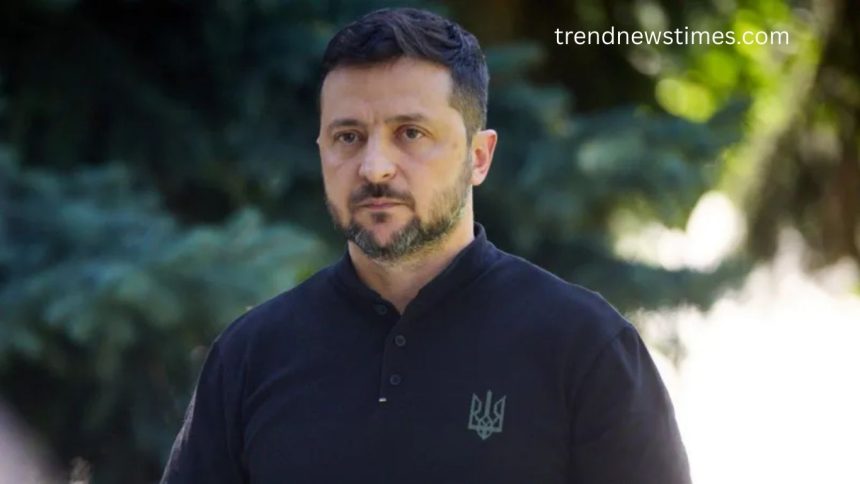
Ukrainian President Volodymyr Zelensky has once again made it clear that Ukraine will not accept compromises that undermine its sovereignty. On Friday, he rejected proposals for establishing a buffer zone between Ukrainian and Russian forces as part of potential peace talks, calling the idea outdated and irrelevant in the context of modern warfare.
Read More: U.S. prevents Palestinian leader’s participation in UN meeting in New York
Zelensky’s Firm Rejection
Speaking to reporters, Zelensky argued that the concept of a buffer zone does not reflect the current technological and strategic realities of war. “Only those who do not understand the technological state of today’s war propose a buffer zone,” he said. His comments followed media reports suggesting that European leaders were considering a 40-kilometer (25-mile) buffer zone as part of either a ceasefire agreement or a long-term political settlement.
The Role of Drone Warfare
Zelensky emphasized that modern warfare—particularly in Ukraine—has been transformed by the extensive use of drones and precision-guided weapons. He pointed out that a de facto buffer zone already exists along the front line because of the reach and effectiveness of drone strikes. Heavy artillery is generally kept at least 10 kilometers apart, as weapons on either side risk being destroyed by drones.
“This buffer—I call it a ‘dead zone,’ some call it a ‘grey zone’—it already exists,” Zelensky explained. The president dismissed the notion of ceding Ukrainian territory in the name of peace. “If Russia wants to have a greater distance from us, they can retreat deep into the temporarily occupied territories of Ukraine.”
Historical Precedents
Buffer zones are not new to global conflict resolution. They have been used in high-stakes situations such as the demilitarized zone (DMZ) between North and South Korea, or the Iron Curtain that divided Eastern and Western Europe during the Cold War. However, Zelensky stressed that comparing today’s battlefield to past geopolitical standoffs is misguided, particularly given the speed and technological sophistication of the Ukraine war.
Diplomatic Efforts Losing Momentum
Despite continued attempts from Western allies to foster dialogue, momentum for a negotiated settlement is fading. A high-level meeting last week involving U.S. President Donald Trump, Zelensky, and top European leaders raised hopes for a potential summit between Zelensky and Russian President Vladimir Putin. However, those hopes quickly diminished. German Chancellor Friedrich Merz declared there would “obviously not” be such a meeting, highlighting Putin’s unwillingness to engage in genuine diplomacy.
The war—now dragging into its 40th month—has seen Russia escalate military aggression instead of reducing hostilities. In one of the largest aerial assaults since the invasion began, Russia launched 629 drones and missiles at Kyiv on Thursday, killing at least 23 civilians. Two of the missiles landed dangerously close to the European Union’s offices in central Kyiv, sparking widespread outrage.
European Leaders Push Back
European leaders have responded with increased urgency. After talks in the French city of Toulon, French President Emmanuel Macron and Chancellor Merz pledged to intensify diplomatic and economic pressure on Moscow. Macron warned that if Putin failed to meet a Monday deadline to engage in talks, it would confirm that “President Putin has played President Trump.” Merz, in a bleak assessment, suggested the war could extend for “many more months.”
EU foreign policy chief Kaja Kallas strongly condemned Russia’s repeated strikes on civilians and infrastructure, labeling them a deliberate escalation. “Russia’s ongoing assaults on civilians and civilian infrastructure…undermine efforts toward peace,” she said.
U.S. and Ukraine Coordination
Amid these developments, Zelensky’s chief of staff, Andriy Yermak, met in New York with U.S. officials including Trump’s special envoy Steve Witkoff, Secretary of State Marco Rubio, and Vice President JD Vance. Yermak stated that while Ukraine welcomes peace initiatives, Russia’s deliberate stalling makes negotiations nearly impossible. “Unfortunately, each of them is being stalled by Russia,” he said.
Security Guarantees for Ukraine
European leaders are exploring mechanisms to guarantee Ukraine’s security if a deal with Russia can eventually be reached. According to Kallas, EU defense ministers agreed on the importance of providing “robust and credible” assurances. Zelensky added that talks are expected to continue on NATO-like security commitments, which could serve as a long-term shield against Russian aggression.
Russia’s Counterarguments
Moscow, however, has dismissed Western initiatives as biased and aimed solely at containing Russia. Russian foreign ministry spokeswoman Maria Zakharova said: “Security guarantees must be based on achieving a common understanding that takes into account Russia’s security interests.” The Kremlin’s position underscores the widening gap between Kyiv’s demands for sovereignty and Moscow’s insistence on concessions.
Frequently Asked Questions:
What did President Zelensky say about the buffer zone proposal?
Zelensky said a buffer zone between Ukrainian and Russian forces is unrealistic, arguing it does not reflect the realities of modern warfare dominated by drones and long-range weapons.
Why does Zelensky reject the idea of a buffer zone?
He believes a buffer zone already exists along the front lines because both sides keep heavy artillery far apart due to constant drone attacks. He also rejects giving up Ukrainian territory for such an arrangement.
Who proposed the buffer zone plan?
Reports suggest some European leaders and diplomats discussed a 40km (25-mile) demilitarized zone as part of a possible ceasefire or long-term peace agreement.
Has Ukraine ever agreed to give up land for peace?
No, Zelensky has consistently opposed surrendering Ukrainian land, insisting that Russia must withdraw from occupied territories instead of forcing Ukraine to compromise.
How has Russia responded to Western peace proposals?
Russia dismissed Western ideas as one-sided, demanding that its own security concerns be taken into account before agreeing to any settlement.
What role does modern technology play in Zelensky’s rejection?
Drone warfare has changed combat dynamics, making traditional buffer zones irrelevant. Artillery and military assets are already positioned far apart due to the risk of drone strikes.
What impact did Russia’s recent attacks have on the peace process?
A massive aerial assault on Kyiv, involving 629 drones and missiles that killed 23 civilians, further weakened hopes for peace and angered European leaders.
Conclusion
President Volodymyr Zelensky’s rejection of a buffer zone underscores Ukraine’s firm stance against territorial concessions and outdated conflict solutions. By highlighting the impact of drone warfare and Russia’s continued escalation, he makes clear that peace cannot come through artificial divisions of land but through genuine withdrawal of occupying forces. With Western leaders pushing for credible security guarantees and Russia resisting meaningful negotiations, the path to ending the war remains uncertain. What is certain, however, is Ukraine’s determination to defend its sovereignty, backed by growing international support, until a fair and lasting peace is achieved.