

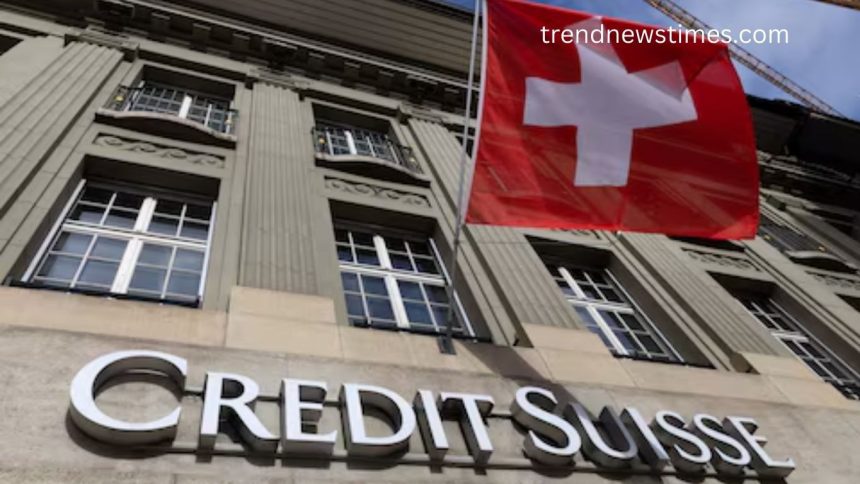
In a landmark development, nineteen former Credit Suisse executives and directors have agreed to a $115 million settlement to resolve shareholder claims tied to poor risk management. The allegations center on massive financial losses in 2020 and 2021, including exposure to Archegos Capital Management, which eventually pushed Credit Suisse toward collapse. Approved on August 29, 2024, by Justice Andrea Masley of the New York State Court in Manhattan, the settlement marks one of the most significant outcomes in the continuing legal fallout of the bank’s failure.
The agreement not only closes a painful chapter for shareholders but also highlights broader lessons in corporate accountability, oversight, and risk management in global banking.
Read More: Appeals Court Strikes Down Most Trump Tariffs, Delivering a Stunning Blow to Trade Agenda in 2024
Details of the Settlement
The settlement was reached in a shareholder derivative lawsuit filed by the Employees Retirement System for the City of Providence, Rhode Island. Under the agreement, insurers for the defendants will fund the $115 million payout, which will be transferred to UBS Group AG. UBS acquired Credit Suisse in 2023 through a government-orchestrated rescue deal, after the Swiss bank teetered on the brink of collapse.
Importantly, the defendants—including former Credit Suisse Chairman Urs Rohner—denied any wrongdoing in agreeing to settle. Their legal representatives declined to provide immediate comment. Meanwhile, attorneys for the shareholder group plan to seek up to 30% of the settlement amount as legal fees, along with $3.2 million for expenses.
Shareholder Allegations
Shareholders accused the former leaders of negligence under Swiss law, claiming their oversight failures left Credit Suisse dangerously exposed to risky counterparties. These included not only Archegos Capital Management, but also Greensill Capital Management and Malachite Capital Management—all of which defaulted, creating severe financial shocks for the bank.
The lawsuit alleged that Credit Suisse’s leaders ignored warning signs, misjudged risk exposure, and failed to implement adequate safeguards. As a result, billions in shareholder value were wiped out, undermining confidence in the Swiss banking sector and contributing to Credit Suisse’s downfall.
The Archegos Collapse: A Turning Point
The most damaging blow came from Archegos Capital Management, a private family office founded by financier Bill Hwang. At its peak, Archegos managed more than $36 billion, using borrowed funds to make aggressive bets on media and technology stocks.
In March 2021, Archegos collapsed after Hwang failed to meet margin calls, triggering a fire sale of assets. Credit Suisse was one of the hardest-hit banks, suffering over $5.5 billion in losses. This disaster not only exposed glaring weaknesses in the bank’s risk controls but also sparked global scrutiny of how large institutions assess counterparty exposure.
Bill Hwang was later convicted of fraud in July 2024 and sentenced to 18 years in prison, though he is appealing the ruling.
Broader Legal Landscape
The settlement in New York is just one piece of a much larger legal puzzle. Last month, a federal judge in Manhattan ruled that UBS must still face two lawsuits brought by former Credit Suisse shareholders and bondholders. Those plaintiffs allege that Credit Suisse misled them with false statements about its financial condition.
At the same time, the same judge dismissed another lawsuit in February 2024 against 29 former Credit Suisse officials and auditor KPMG, where plaintiffs accused the bank of two decades of “continuous mismanagement.” The dismissal highlights the complexity of attributing blame in long-term corporate failures but does not shield executives from accountability in specific cases of risk oversight.
UBS Takes the Helm
With the acquisition of Credit Suisse in 2023, UBS inherited both the assets and liabilities of its troubled rival. The settlement funds, once distributed, will strengthen UBS’s position, but the bank remains entangled in ongoing litigation.
For UBS, absorbing Credit Suisse presented both opportunities and risks. On one hand, the takeover expanded UBS’s wealth management dominance, especially in Switzerland and Asia. On the other hand, the integration has been costly, legally complicated, and reputationally sensitive.
UBS must now demonstrate to regulators, investors, and clients that it can manage risks more effectively than Credit Suisse did, ensuring that history does not repeat itself.
Lessons for Corporate Governance
The Credit Suisse saga offers powerful lessons about governance, risk management, and accountability:
Risk Oversight is Non-Negotiable
Banks cannot afford complacency in assessing exposure to counterparties, especially those relying heavily on leverage. The Archegos collapse showed how quickly unchecked risks can spiral into multibillion-dollar losses.
Transparency Protects Shareholder Trust
Shareholders accused Credit Suisse executives of misleading statements and poor disclosure. Transparent communication about risks and exposures is essential for maintaining investor confidence.
Accountability Extends Beyond Institutions
The $115 million settlement shows that individual executives and directors can face legal consequences for governance failures, even years after leaving their posts.
Regulatory Vigilance is Crucial
Credit Suisse’s collapse spurred global regulators to strengthen rules around capital requirements, leverage, and counterparty monitoring. These measures aim to prevent similar crises in the future.
Impact on Shareholders and Investors
For the shareholders who brought the case, the settlement represents both vindication and partial recovery. While the payout will not erase the billions lost, it underscores the principle that negligence at the top of a financial institution carries consequences.
Institutional investors, such as pension funds, rely on strong governance to safeguard the assets of retirees and public employees. The Providence Retirement System’s leadership in this case demonstrates how shareholder activism can drive accountability and change in global finance.
Frequently Asked Questions:
What is the Credit Suisse $115 million settlement about?
The settlement resolves shareholder claims that former Credit Suisse executives and directors failed to manage risks properly, leading to massive losses in 2020–2021, including exposure to Archegos Capital Management.
Who is paying the $115 million settlement?
The settlement will be funded by insurers for the former Credit Suisse executives and directors, not by the individuals themselves.
Who are the defendants in the case?
Nineteen former Credit Suisse executives and directors, including former Chairman Urs Rohner, were named in the lawsuit. All denied wrongdoing but agreed to settle.
Who filed the lawsuit against Credit Suisse’s ex-officials?
The lawsuit was led by the Employees Retirement System for the City of Providence, Rhode Island, representing shareholders impacted by Credit Suisse’s failures.
What role did Archegos Capital play in Credit Suisse’s downfall?
Archegos collapsed in March 2021 when its founder, Bill Hwang, failed to meet margin calls. Credit Suisse suffered more than $5.5 billion in losses, exposing deep weaknesses in its risk controls.
What will happen to the settlement funds?
After deducting legal fees and expenses, the settlement funds will go to UBS Group AG, which acquired Credit Suisse in a government-backed rescue deal in 2023.
Are there other lawsuits related to Credit Suisse’s collapse?
Yes. UBS still faces multiple lawsuits from former Credit Suisse shareholders and bondholders who claim they were misled about the bank’s financial health.
Conclusion
The $115 million settlement with former Credit Suisse executives marks an important milestone in the aftermath of one of the most dramatic banking failures in modern history. While the defendants denied wrongdoing, the agreement underscores that corporate leaders can still be held accountable for oversight failures that devastate shareholder value. For UBS, which absorbed Credit Suisse in 2023, the settlement is both a financial recovery and a reminder of the risks it has inherited. For global investors, regulators, and financial institutions, the case highlights the critical importance of robust risk management, transparent governance, and accountability at the executive level.


