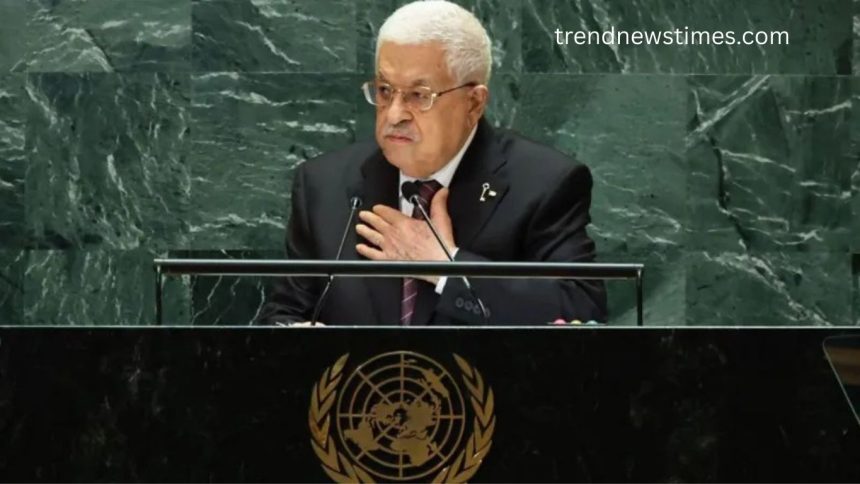
The upcoming United Nations General Assembly in New York has already become the center of global attention. What would normally be a routine gathering of heads of state has now been overshadowed by a major diplomatic controversy. The United States has barred Palestinian President Mahmoud Abbas and nearly 80 other Palestinian officials from attending the session, citing political and security concerns.
This move, unprecedented in recent years, has sparked outrage among Palestinians, concern within the United Nations, and applause from Israel. It also raises larger questions about the future of the Israeli-Palestinian conflict, the two-state solution, and Washington’s role as a supposed broker of peace.
Read More: Ukraine Conflict Update: Putin Addresses Allegations of a Potential European Offensive by Moscow
The U.S. Decision and Its Justification
According to the U.S. State Department, all visas held by Abbas and dozens of Palestinian officials were revoked. Secretary of State Marco Rubio defended the decision, claiming that Palestinian leaders were undermining peace efforts by seeking “unilateral recognition of a conjectural Palestinian state.” He argued that any recognition should come through direct negotiations with Israel, not international forums.
Rubio also pointed to Palestinian legal actions against Israel in international courts and accused Palestinian leaders of failing to denounce terrorism, including Hamas’s October 7, 2023 attack that killed over 1,200 Israelis and resulted in hundreds of hostages.
“Before the PLO and PA can be considered partners for peace, they must consistently repudiate terrorism and end incitement,” Rubio stated. He emphasized that U.S. law requires such conditions before Palestinian leaders can expect political engagement or support.
A Violation of International Protocol
The move by Washington is controversial because the UN Headquarters Agreement, signed in 1947, obligates the United States to allow representatives of all UN member states and observers to attend meetings in New York, regardless of political disputes.
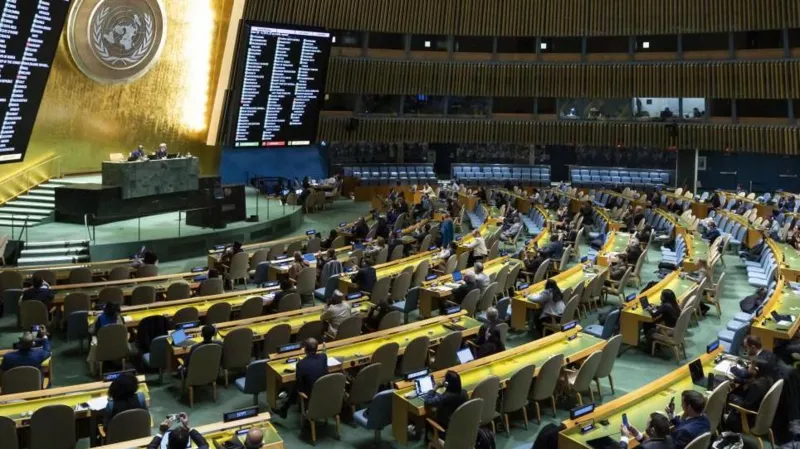
UN spokesman Stephane Dujarric confirmed that the matter was being discussed with the State Department, stressing the importance of ensuring all members and observers could participate. He highlighted that the upcoming General Assembly would host key discussions on the two-state solution, including initiatives led by France and Saudi Arabia.
Palestinian officials argue that the U.S. decision contradicts both international law and the UN Headquarters Agreement. As an observer state at the UN, Palestine maintains certain rights of representation, even if not recognized universally as a full member state. Abbas’s office described the ban as “astonishing and legally baseless.”
Israel’s Response and Regional Reactions
The Israeli government openly welcomed Washington’s move. Foreign Minister Gideon Saar praised the decision as a necessary step to prevent what he called “political theater” at the UN. Israeli officials argue that granting Abbas and his delegation a platform at the General Assembly would only serve to legitimize groups that reject Israel’s existence.
For Israeli Prime Minister Benjamin Netanyahu, the U.S. decision aligns with his long-standing opposition to the creation of a Palestinian state. He insists that recognition of Palestine would reward “Hamas’s monstrous terrorism” and undermine Israel’s security.
On the other hand, France, the UK, Canada, and Australia have announced plans to push for recognition of a Palestinian state during the Assembly. France, in particular, has taken a leading role, arguing that recognition is essential to keeping the two-state solution alive amid ongoing violence.
Historical Context of Palestine at the UN
The Palestinian quest for recognition at the UN is not new. In 1974, the General Assembly recognized the Palestine Liberation Organization (PLO) as the sole legitimate representative of the Palestinian people, granting it observer status.
In 2012, Palestine’s status was upgraded to that of a non-member permanent observer state, despite strong opposition from Israel and the United States. Since then, Palestinians have used this platform to join international treaties and file cases against Israel in global courts.
Currently, 147 out of 193 UN member states officially recognize Palestine. However, without clear borders and with large parts of the West Bank under Israeli settlements—illegal under international law—recognition has yet to translate into real sovereignty on the ground.
The Gaza War and Its Impact on Diplomacy
The diplomatic clash comes against the backdrop of one of the deadliest wars in the history of the conflict. Israel’s military campaign in Gaza, launched after the October 7 Hamas-led assault, has left over 63,000 people dead, according to the Hamas-run health ministry. Entire neighborhoods in Gaza lie in ruins, and the humanitarian crisis has drawn condemnation from much of the world.
For Palestinians, the war underscores the urgency of achieving international recognition and political protection. For Israel, however, it reinforces the narrative that Palestinian leadership cannot be trusted as peace partners while Hamas controls Gaza and attacks Israeli civilians.
Abbas’s Leadership Under Pressure
President Abbas, who also heads the Palestinian Authority (PA) and the PLO, faces mounting criticism at home. His authority in the West Bank has been steadily weakened by Israeli settlement expansion, political rivals, and widespread frustration with the stalled peace process.
The decision to block his participation at the UN further undermines his international standing. Palestinians see the visa denial not only as an attack on their leadership but also as an attempt to silence their voice on the world stage at a critical moment.
The Future of the Two-State Solution
For decades, the two-state solution—envisioning an independent Palestinian state alongside Israel with East Jerusalem as its capital—has been the international community’s preferred framework for peace. Yet with each passing year, it appears more distant.
Netanyahu and much of the Israeli political establishment reject the concept outright, while Palestinian leaders argue that settlement expansion has already made the vision nearly impossible to realize.
The upcoming UN session, led by France and supported by several Western nations, aims to reignite momentum for Palestinian statehood. However, without U.S. support, any symbolic recognition risks falling short of meaningful change.
Frequently Asked Questions:
Why did the U.S. block Mahmoud Abbas from attending the UN General Assembly?
The U.S. State Department revoked visas for Abbas and about 80 Palestinian officials, citing concerns that Palestinian leaders were undermining peace efforts and pursuing unilateral recognition of a Palestinian state outside direct negotiations with Israel.
How many Palestinian officials were affected by the U.S. decision?
Around 80 officials from the Palestinian Authority (PA) and the Palestine Liberation Organization (PLO) had their visas denied or revoked.
Does this decision violate international agreements?
Critics argue that the move contradicts the UN Headquarters Agreement of 1947, which requires the U.S. to allow access for representatives of UN members and observers, regardless of political disputes.
What has been the Palestinian response?
Palestinian leaders called the decision “astonishing” and claimed it violates international law. They urged the U.S. to reverse the move, stressing Palestine’s status as an observer state at the UN.
How did Israel react to the U.S. decision?
Israel welcomed the move. Israeli officials, including Foreign Minister Gideon Saar, praised it as a step that prevents Palestinians from using the UN stage to push unilateral recognition.
What role does France and other nations play in this dispute?
France, along with the UK, Canada, and Australia, supports recognizing a Palestinian state at the UN meeting. These efforts directly clash with U.S. and Israeli opposition.
How many countries recognize Palestine as a state?
Currently, 147 out of 193 UN member states officially recognize the State of Palestine, although it remains a non-member observer at the UN.
Conclusion
The U.S. decision to block Mahmoud Abbas and dozens of Palestinian officials from attending the UN General Assembly has opened a new chapter in the long-running Israeli-Palestinian conflict. While Washington justifies the move as a matter of security and legal obligation, Palestinians view it as a violation of international law and an attempt to silence their voice on the global stage. Israel celebrates the outcome, while much of the international community, including France and other allies, continues to push for Palestinian statehood recognition.