

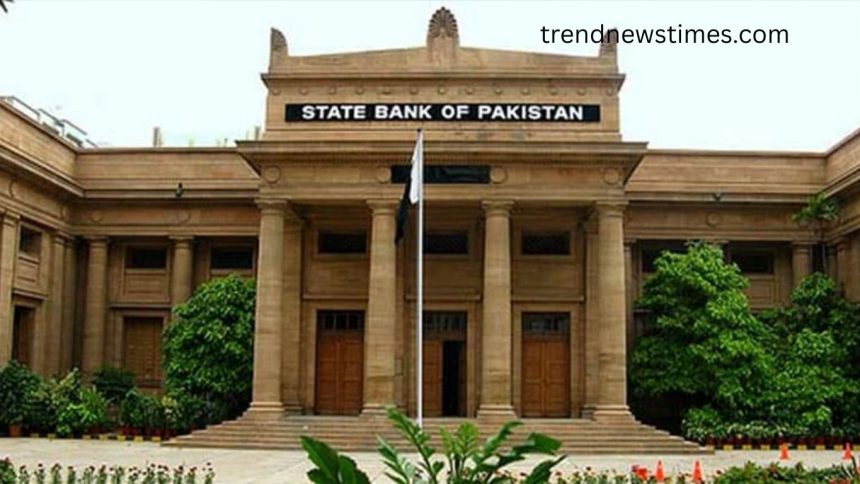
The foreign exchange reserves of Pakistan have shown a marginal increase, reflecting cautious optimism in the country’s financial stability. Data released by the State Bank of Pakistan (SBP) on Thursday revealed that the central bank’s reserves rose by $18.1 million on a weekly basis, signaling a positive, albeit modest, shift in the nation’s external liquidity position.
As of August 22, the SBP’s foreign currency reserves were recorded at $14.274 billion, slightly higher than $14.256 billion reported on August 15. This incremental growth indicates that Pakistan’s central bank continues to maintain a steady buffer of foreign currency, an essential factor for stabilizing the exchange rate and meeting international payment obligations.
In addition to the central bank reserves, overall liquid foreign currency reserves in the country—including the net reserves held by commercial banks—totaled $19.618 billion, representing a weekly increase of $47 million. The net reserves held by banks stood at $5.344 billion, registering a rise of $28.9 million compared to the previous week. These figures highlight the combined contribution of the central bank and commercial banks toward sustaining the nation’s external liquidity.
Read More: Best Altcoins Poised to Reshape the Cryptocurrency Scene During Alt season
Understanding the Significance of Foreign Exchange Reserves
Foreign exchange reserves are critical for any country’s economic health. They act as a safeguard against external shocks, support the local currency, and provide confidence to investors and international institutions regarding a country’s ability to meet its foreign obligations. For Pakistan, maintaining a healthy level of reserves is particularly important given its reliance on imports for essential goods such as oil, machinery, and food items.
A higher reserve level allows the State Bank of Pakistan to manage currency volatility and ensure smooth functioning of trade and financial markets. In times of economic uncertainty or global financial turbulence, adequate reserves can help mitigate the impact on the domestic economy.
Factors Contributing to the Recent Increase
Several factors may have contributed to the recent increase in Pakistan’s foreign exchange reserves. Remittances from overseas Pakistanis continue to play a crucial role in bolstering the country’s external liquidity. Additionally, export receipts, foreign direct investment, and support from international financial institutions can positively influence reserve levels.
The incremental weekly growth in SBP reserves, although modest, is a positive signal to the market. It indicates that inflows are keeping pace with external payments, albeit slowly, and demonstrates the central bank’s active role in managing the country’s foreign currency resources.
Impact on the Economy and Currency Stability
A stable or rising level of foreign exchange reserves directly affects Pakistan’s economic stability. Adequate reserves strengthen investor confidence, stabilize the Pakistani rupee, and reduce the risk of sudden depreciation. This, in turn, helps control inflationary pressures caused by import-dependent sectors.
Moreover, reserves provide the central bank with the flexibility to intervene in the foreign exchange market when necessary. For instance, during periods of excess demand for dollars, SBP can release foreign currency to prevent excessive pressure on the rupee. Conversely, in times of surplus, the central bank can accumulate reserves to reinforce financial stability.
Comparative Perspective
When compared to historical data, Pakistan’s foreign exchange reserves have faced periods of fluctuation due to global economic conditions, domestic policy decisions, and external debt obligations. The current increase, albeit marginal, reflects cautious optimism. It suggests that despite ongoing economic challenges, the central bank and commercial banks are effectively managing the country’s foreign currency resources.
Regional and global economic developments, such as oil price volatility, geopolitical tensions, and changes in trade patterns, also influence the dynamics of foreign exchange reserves. For Pakistan, maintaining a balance between inflows and outflows remains critical to ensuring long-term economic stability.
Role of the State Bank of Pakistan
The State Bank of Pakistan plays a central role in managing the country’s foreign exchange reserves. By monitoring inflows and outflows, intervening in the currency market when necessary, and coordinating with commercial banks, SBP ensures that reserves remain at a sustainable level.
The bank’s prudent monetary policies, combined with ongoing efforts to attract foreign investment and increase exports, are essential to maintaining reserve stability. While the recent $18.1 million increase is relatively small, it is part of a broader strategy to stabilize the country’s financial environment and support economic growth.
Frequently Asked Questions:
What are Pakistan’s current foreign exchange reserves?
As of August 22, the State Bank of Pakistan (SBP) reported its foreign currency reserves at $14.274 billion, showing a marginal weekly increase of $18.1 million.
What are overall liquid foreign reserves in Pakistan?
When including net reserves held by commercial banks, Pakistan’s total liquid foreign reserves stand at $19.618 billion, marking a weekly rise of $47 million.
How much do commercial banks contribute to the reserves?
Commercial banks hold $5.344 billion in net reserves, which increased by $28.9 million during the past week.
Why are foreign exchange reserves important?
Foreign exchange reserves help stabilize the local currency, manage import payments, support investor confidence, and act as a buffer against economic shocks.
What factors influence the growth of SBP reserves?
Key factors include remittances from overseas Pakistanis, export receipts, foreign direct investment, and support from international financial institutions.
How do these reserves impact the Pakistani rupee?
Higher reserves allow the SBP to intervene in the foreign exchange market, stabilizing the rupee and reducing volatility, which also helps control inflation.
Is the recent increase in reserves significant?
While the increase is modest, it reflects ongoing stability and careful management by the SBP and commercial banks amid global economic uncertainties.
Conclusion
In summary, the State Bank of Pakistan’s foreign exchange reserves have shown a steady increase, reaching $14.27 billion, while overall liquid reserves climbed to $19.618 billion. This positive trend reflects careful management by the SBP and commercial banks, strengthening investor confidence and supporting the stability of the Pakistani rupee. Although the growth is modest, it underscores the importance of maintaining adequate reserves to safeguard the economy, manage imports, and ensure resilience against external shocks. With continued focus on exports, remittances, and economic reforms, Pakistan is on a path toward stronger financial stability and sustained economic growth.


