The Pakistan Stock Exchange (PSX) witnessed a strong rally during the week, fueled by institutional buying, rising foreign exchange reserves, rupee appreciation, and government efforts to address the persistent circular debt challenge. Cement, banking, and energy sectors led the recovery, restoring confidence among investors and lifting market sentiment.
Read More: SBP Reserves Achieve Steady Growth, Surging to an Impressive $14.27 Billion
Institutional Buying Sparks a Turnaround
Market observers highlighted that institutional investors played a critical role in the rebound. Ahsan Mehanti, Managing Director of Arif Habib Corporation, explained that stocks recovered on renewed institutional interest as speculation rose ahead of the August 2025 inflation data. He added that easing pressure from futures rollover also supported the bullish trend.
According to Mehanti, surging forex reserves, a strengthening rupee, and government deliberations to settle circular debt combined to drive the positive close at the PSX. These developments reduced uncertainty and encouraged investors to take fresh positions in key sectors.
Benchmark Index Gains Over 1,200 Points
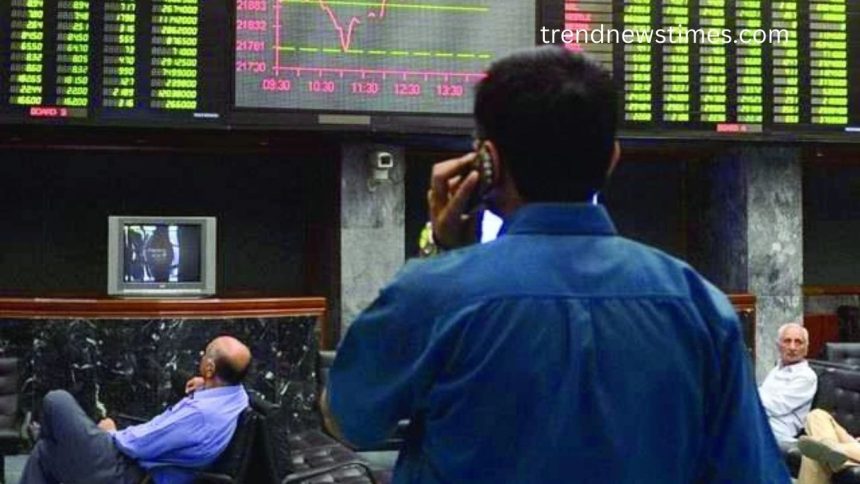
At the close of trading, the benchmark KSE-100 index posted an impressive surge of 1,274.27 points, or 0.86%, settling at 148,617.78. The index had briefly dipped to an intra-day low of 147,488 before making a significant turnaround, underscoring investor confidence in market fundamentals.
Brokerage firm KTrade noted that the PSX experienced a clear reversal of trend, with strong buying interest concentrated in the cement sector. Stocks such as DG Khan Cement and Fauji Cement surged to their upper circuits, while oil and gas companies also recorded modest gains.
Cement and Banks Lead the Charge
Sector-wise, cement and banking stocks added the most points to the index. Among the top gainers were Habib Bank Limited (HBL), DG Khan Cement, Lucky Cement, Fauji Cement, and Systems Limited. These stocks helped lift overall market performance, setting the tone for a positive week ahead.
Arif Habib Limited (AHL) also highlighted the sectoral recovery, noting that the benchmark index managed to protect the 147.5k support level despite weekly losses of 0.6%. Gains were led by HBL (+3.12%), DG Khan Cement (+10%), and Lucky Cement (+2.19%), while some heavyweights like Engro Holdings (-0.95%), Meezan Bank (-1.03%), and Indus Motor (-4.84%) dragged the index.
Market Sentiment Remains Optimistic
Muhammad Hasan Ather, analyst at JS Global, wrote that the KSE-100 saw a strong rebound, closing at 148,618 after gaining 1,274 points. He explained that investors responded positively to the recent correction, showing renewed appetite for risk.
According to Ather, the rally was supported by recoveries in cement, banking, and oil exploration stocks. However, he cautioned that while flood-related concerns in Punjab have eased slightly, the market remains vigilant about the long-term impact on agriculture and the central bank’s muted growth outlook.
Trading Activity Strengthens
Trading volumes reflected the renewed momentum. Total shares traded during the session reached 1.3 billion, up from 935.5 million in the previous session. The value of traded shares stood at Rs52.3 billion, indicating robust market participation.
In total, 474 companies were traded, with 236 closing higher, 203 lower, and 35 remaining unchanged. The rebound highlighted improved investor confidence, supported by both domestic and institutional activity.
Volume Leaders
The Bank of Punjab emerged as the session’s volume leader, with 128.8 million shares traded. The stock gained Rs0.81 to close at Rs15.07. It was followed by Pakistan International Bulk Terminal, which saw 122.2 million shares change hands, closing up by Rs0.63 at Rs12.79. K-Electric also remained active with 71.7 million shares, rising Rs0.15 to close at Rs5.32.
Foreign investors, however, remained net sellers, offloading shares worth Rs1.2 billion, according to data from the National Clearing Company of Pakistan Limited (NCCPL). Despite this selling pressure, strong local institutional support offset the impact, allowing the index to close firmly in positive territory.
Government Policies and Economic Drivers
Beyond institutional buying, broader economic indicators supported the rally. Rising forex reserves strengthened investor confidence in Pakistan’s external position. The rupee’s appreciation against the US dollar also provided relief to import-heavy industries and improved overall market sentiment.
Additionally, the government’s continued deliberations on resolving circular debt in the energy sector signaled potential policy action. If addressed effectively, this move could significantly improve liquidity across the power and energy sectors, which remain critical for sustainable economic growth.
Weekly Performance and Future Outlook
For the week, the KSE-100 index closed slightly lower at 147.5k, down 0.6% week-on-week, but Friday’s recovery signaled resilience in the market. Analysts believe the 147.5k level now serves as a strong support base, while 151.2k remains the key upside target for the coming sessions.
Market watchers anticipate that the momentum could continue if macroeconomic stability improves further. Sectors such as cement, banking, and energy are likely to remain in focus, particularly if institutional investors maintain their buying spree.
However, risks remain. Flood-related agricultural concerns, the central bank’s cautious growth outlook, and global commodity price fluctuations could create volatility in the weeks ahead. Foreign outflows also remain a challenge that may limit upside momentum unless countered by strong domestic participation.
Broader Market Implications
The PSX rally carries important implications for Pakistan’s financial landscape. A stable and growing stock market helps attract foreign investment, provides companies with a strong platform to raise capital, and strengthens domestic investor confidence. The recent recovery, supported by solid economic indicators and institutional participation, demonstrates that the market retains resilience even amid external and domestic challenges.
Experts stress that sustaining this momentum will depend on consistent government reforms, policy clarity, and effective management of structural issues such as circular debt. In addition, continued stability in the rupee and forex reserves will be crucial to maintaining investor confidence.
Frequently Asked Questions:
Why did the PSX roar back in 2025?
The PSX gained momentum in 2025 due to strong institutional buying, rising foreign exchange reserves, rupee appreciation, and government efforts to address circular debt.
Which sectors led the PSX recovery?
The cement, banking, and energy sectors were the main drivers of the rally, with major gains in stocks like DG Khan Cement, Lucky Cement, HBL, and Fauji Cement.
How much did the KSE-100 index gain during the recovery?
The KSE-100 index surged by 1,274 points, or 0.86%, closing at 148,617.78 in a strong rebound.
What role did institutional investors play in the rally?
Institutional investors injected liquidity into the market, sparking renewed confidence and helping the index recover from earlier losses.
Did foreign investors participate in the PSX rally?
Foreign investors remained net sellers, offloading shares worth around Rs1.2 billion. However, strong local institutional support offset this selling pressure.
What was the trading volume during the rally?
Trading volumes rose sharply, with 1.3 billion shares traded compared to 935.5 million in the previous session, reflecting robust participation.
What are the future targets for the KSE-100 index?
Analysts expect the 147.5k level to act as support, with 151.2k as the key upside target in upcoming sessions.
Conclusion
The Pakistan Stock Exchange’s sharp rebound in 2025 reflects renewed confidence driven by institutional buying, rising forex reserves, rupee appreciation, and government initiatives to resolve structural challenges like circular debt. Cement, banking, and energy sectors played a pivotal role in lifting the KSE-100 index by more than 1,200 points, while trading volumes surged, signaling strong investor participation. Despite foreign outflows and lingering risks such as agricultural concerns and global market volatility, the PSX has demonstrated resilience. With 147.5k acting as a solid support level and 151.2k emerging as the next target, the market outlook remains cautiously optimistic. Sustained policy support, economic stability, and continued institutional interest will be essential in maintaining this upward momentum through 2025.